Kosher Kav
August 2026 – present
Kosher restaurant discovery, delivery and video platform: a React Native app plus a Next.js 16 admin dashboard and public API on Cloudflare Workers. Sole engineer; suite grown from 616 to 1,347 tests.
- Client
- Kosher Kav LLC — USA (remote)
- Role
- Mobile App & Full-Stack Developer, sole engineer
- Platform
- iOS & Android (React Native) · Web admin + public API
- Period
- August 2026 – present
- Stack
- React Native 0.81
- React 19
- Next.js 16
- Tailwind v4
- Cloudflare Workers
- D1 + Drizzle
- Durable Objects
- Vitest (workerd)
- OneSignal
- Source
- Private — details limited by client agreement
616 → 1,347
tests, all green (291 suites)
12
locales, every user-facing string
2.23 → 7.35 : 1
selected-chip contrast (WCAG)
In short
I built a Kosher restaurant discovery, delivery and video platform for Kosher Kav LLC’s customers, delivering a React Native iOS/Android app plus a Next.js 16 admin dashboard and public API hosted on Cloudflare Workers. As the sole Mobile App & Full-Stack Developer I replaced a white-label marketplace template that could not be customized, adding kosher certification data, a video feed and a real map experience while keeping the app shipping to both stores and staying within the free tier. The test suite grew from 616 to 1,347 tests.
Written by AI from this case study.
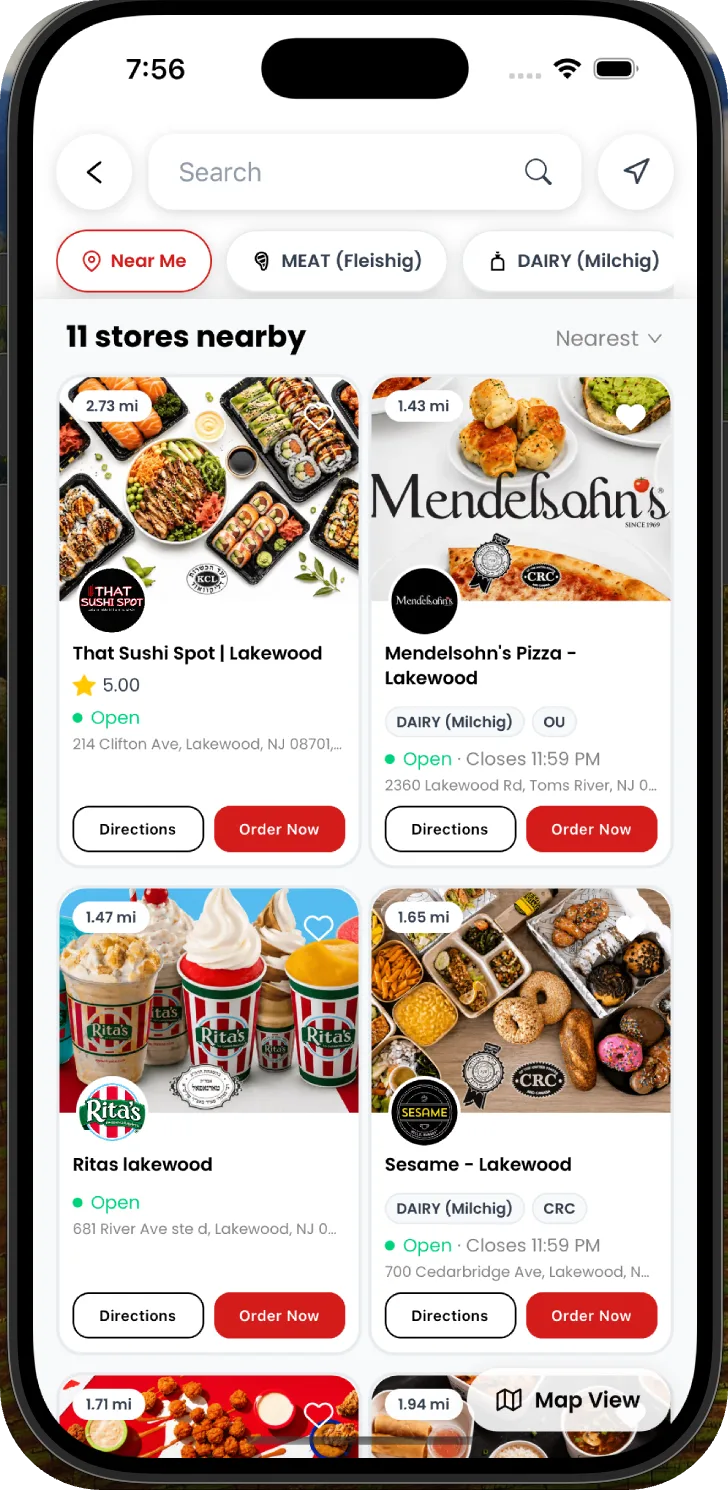
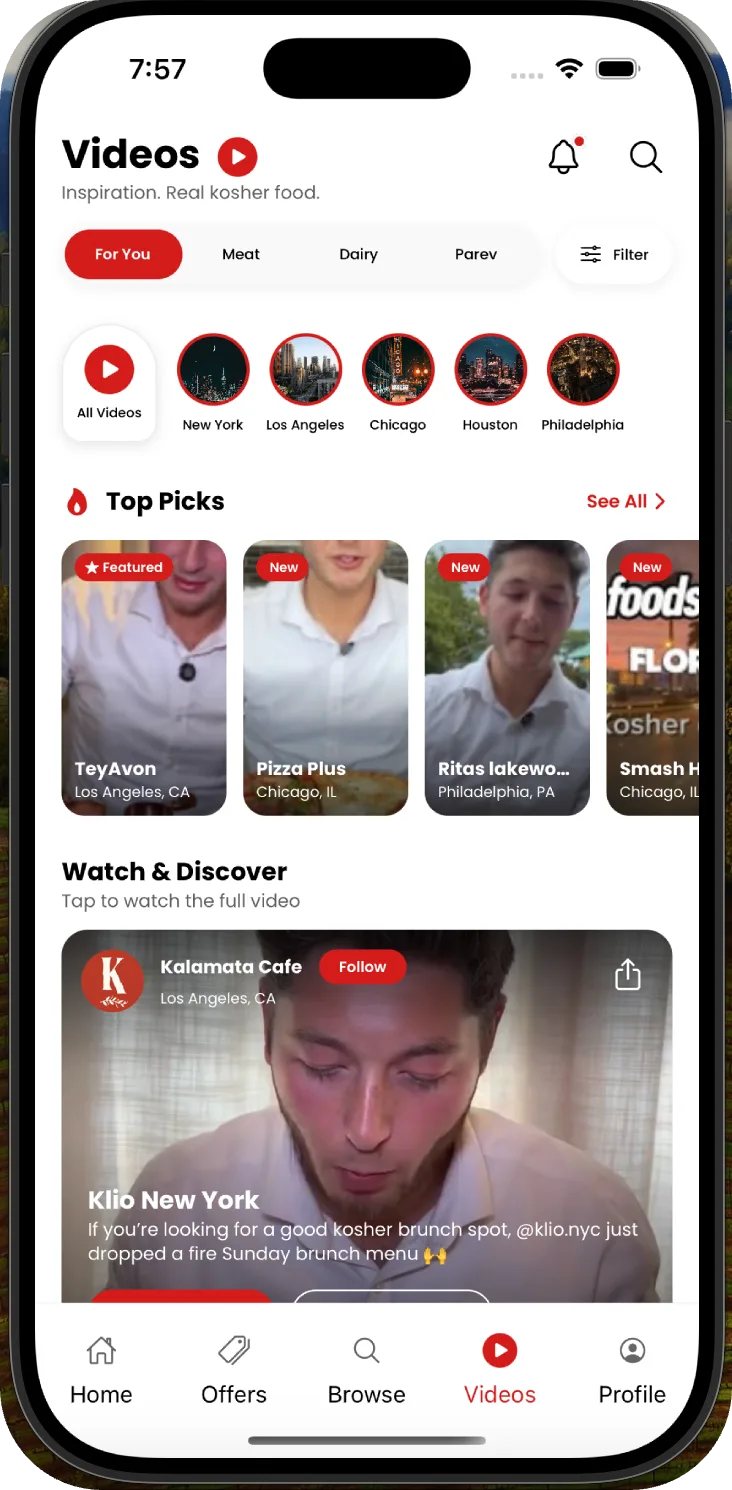
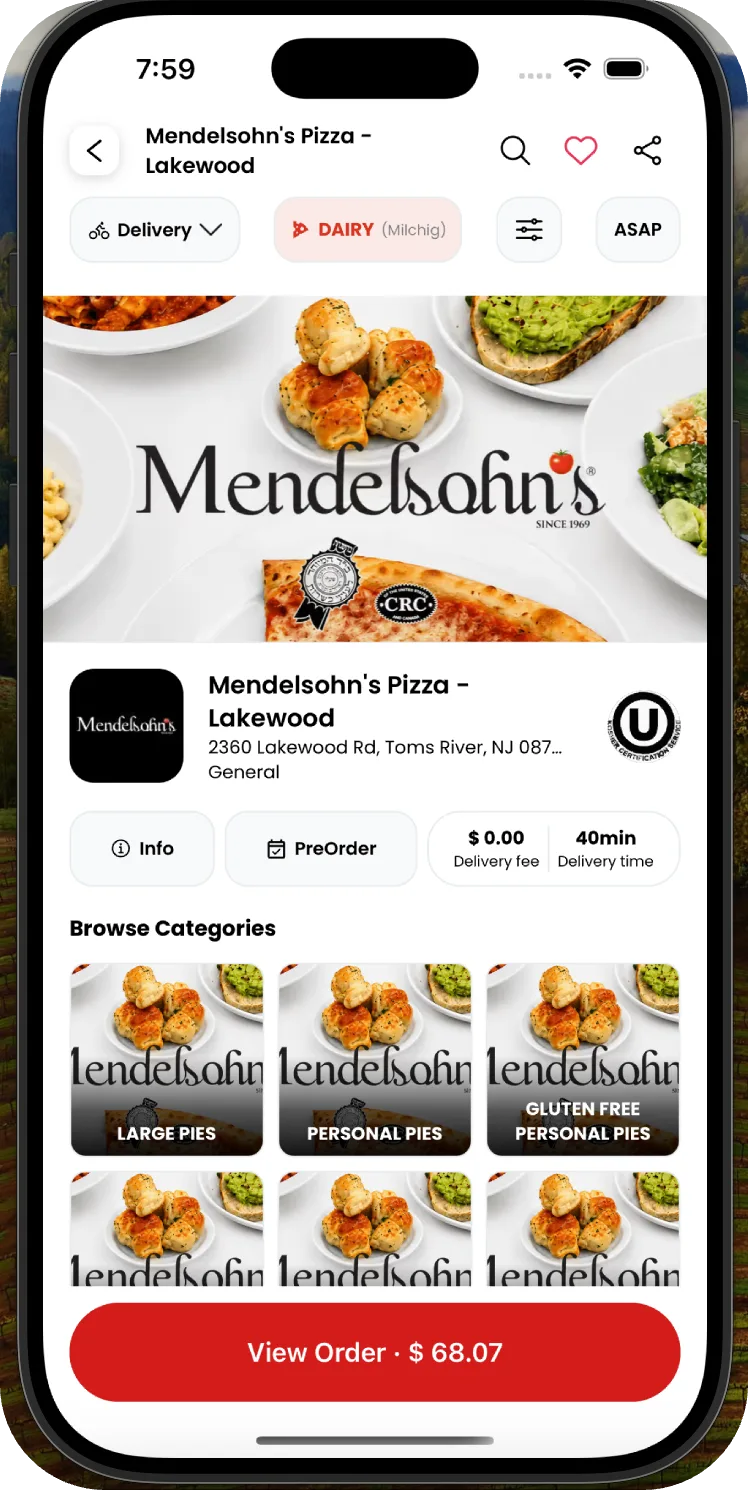
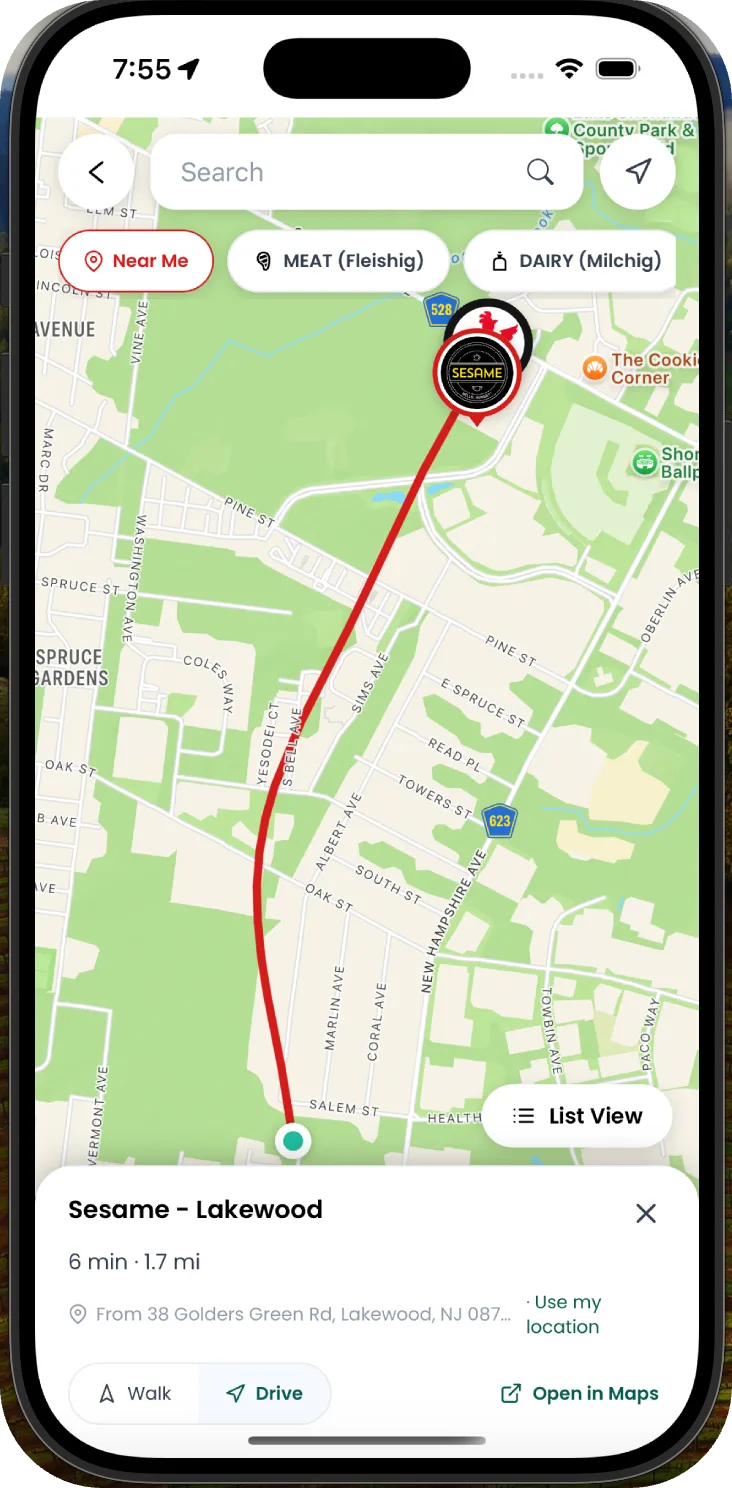
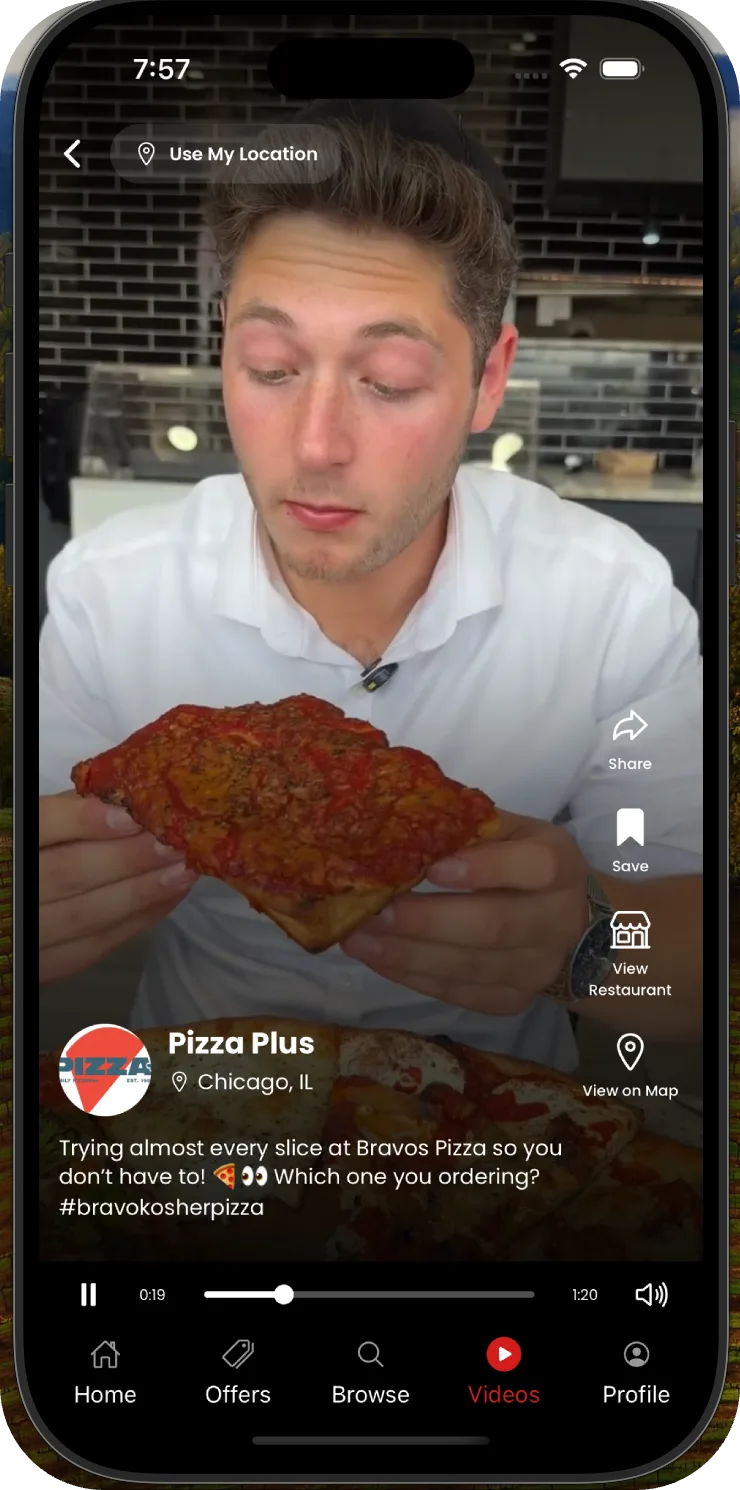
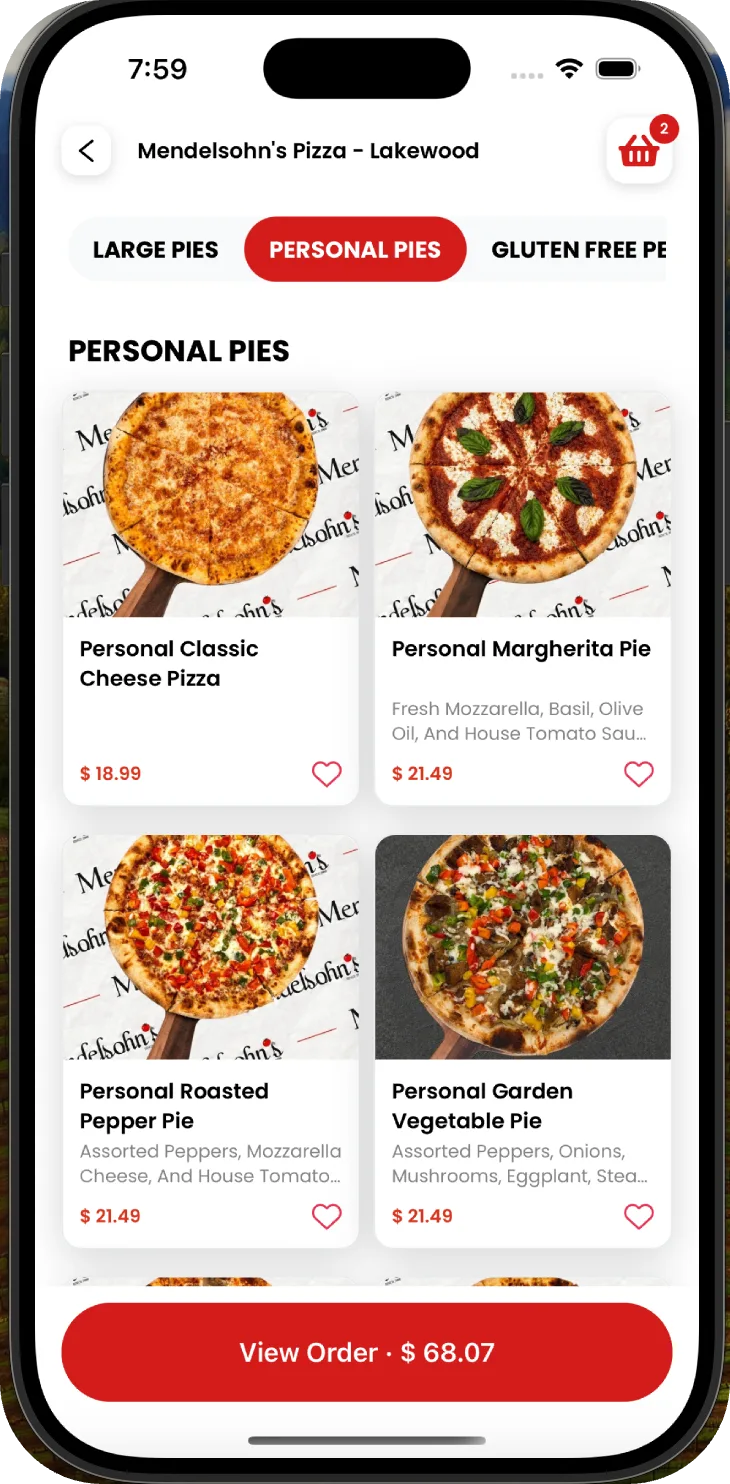
Context & constraints
Kosher Kav started life as a white-label tenant of ordering.co's marketplace template. That gave the client a working app quickly, but the hosted builder regenerates the code from their template, so anything custom — kosher certification data, a video feed, a real map experience — was either impossible or would be overwritten.
The constraints: ordering.co's schema could not be changed, the back end had to run on the Cloudflare Workers free tier, the app had to keep shipping to both stores through the transition, and I was the only engineer.
Architecture
Two codebases. The React Native 0.81 / React 19 app was forked into a repo we control, with the headless @components layer vendored in so the tree clones and builds standalone. The second codebase is a pnpm workspace — apps/dashboard, packages/shared, packages/db — running Next.js 16 (App Router, Turbopack) + React 19 + Tailwind v4 on Cloudflare Workers via @opennextjs/cloudflare, with Cloudflare D1 and Drizzle ORM migrations.
It is a dual-backend design with clear domain ownership. ordering.co keeps business identities and locations. Our API owns the kosher layer — kashrut types and certifiers keyed by business ID — and the video product. Location data is fetched from ordering.co live, without caching or syncing, so an edit on their side shows up in the app immediately.
Key decisions
- Fork and vendor instead of keep customising the tenant: the only way to own the build and signing was to own the code. It cost a week of untangling; it bought every feature since.
- Durable Objects for counting and abuse control: one ViewCounter per video buffers plays and flushes to D1 on a 10-second alarm (SQLite-backed, so it runs on the free tier), and one RateLimiter token bucket per (client, video) — 30 burst / 120 per hour — guards the single route where a wrong write is permanent.
- Hand-rolled session-cookie auth for the dashboard: PBKDF2-HMAC-SHA256 over Web Crypto, no library. Workers has no Node crypto, and the surface area was small enough that a dependency would have been more risk than the 80 lines it replaced.
- Store data sync that admits when it is stale: anonymous ingestion of the ordering.co listing into D1 with change detection that updates cached coordinates but never touches editorially-owned columns, and a visible lastSyncedAt instead of a cron nobody would notice failing.
- A hand-written Google encoded-polyline decoder for route drawing, verified against Google's published reference vector and its re-encode, with malformed input returning empty rather than looping.
What broke
Three defects the UI could not show. A marker-load counter was compared against a stale denominator, which left every map pin re-rasterizing on every frame after any filter tap — the map felt slow and nobody could say why. A session cache was written on resolve rather than on request, so four consumers mounting together all missed it and all fetched; reading the code had confirmed the false claim that it was cached, and the test that was budgeted as a formality is what found it. And a shared OButton silently dropped accessibilityLabel because it forwarded an allow-list of props instead of ...props.
Release engineering had its own: a template merchant-ID entitlement that broke code signing, and a hard-coded localhost API URL that would have killed the Videos tab in every build but the dev machine.
Quality
The clone came with a 616-test baseline. It now runs 1,347 tests across 291 suites, all green, with TypeScript held at an agreed pre-existing-error baseline that is diffed on every change and never regressed, zero lint errors, and i18n complete across 12 locales. The dashboard and API are tested inside workerd with Vitest + @cloudflare/vitest-pool-workers against a real D1.
Accessibility: colour-only filter state replaced with accessibilityState and a checkmark (WCAG 1.4.1), the selected chip raised from 2.23:1 to 7.35:1 contrast, screen-reader sentences composed for badge rows that used to announce as fragments, animation gated behind Reduce Motion, and one generic error state split into offline / service-down / empty-with-filters, each with the right recovery action.
What I'd do differently
Write the "is it actually cached?" test on day one. I spent longer confirming that claim by reading than the test took to write, and the test was right where the reading was wrong. More generally: on an inherited codebase, treat every comment that describes behaviour as a hypothesis until a test says otherwise.
Evidence
Source is private under the client agreement. The screenshots above are from the app; restaurant listings, menus and videos come from the client's live ordering.co tenant. Happy to demo the Videos tab, the map discovery flow and the Durable Object rate limiter on a call.
Two pieces are public: the polyline decoder, with the Google reference-vector and malformed-input tests, and the Durable Object token-bucket rate limiter, tested inside workerd.
Source private — details limited by client agreement.
Write-ups from this project
- The map that felt slow: a counter against a stale denominator
Every pin re-rasterized on every frame after any filter tap. Nothing errored, nothing was reported, and the cause was one comparison.
- The cache that was documented but didn't exist
Four consumers mounted together, all missed the session cache, all fetched. The code review said it was cached. The formality test said otherwise.
- The button that dropped accessibilityLabel
A shared button forwarded an allow-list of props instead of ...props. Everything sighted testers used worked; everything screen readers needed was gone.
- Session auth without a library, twice
PBKDF2 over Web Crypto on Cloudflare Workers; HS256 JWT in HttpOnly cookies with double-submit CSRF in PHP. When 80 lines is less risk than a dependency.
- Breaking out of a white-label template
Kosher Kav started as a hosted marketplace tenant. Anything custom was impossible or overwritten on the next regenerate. The way out was owning the stack.